

Project Case
Welding vs Brazing: What is the Difference (2026 Guide)
Welding melts the base metals to create a fused joint, while brazing joins metals without melting them using a filler metal. This guide explains the key differences, advantages, and how to choose the right process for your project.
Metal joining is at the core of almost every industrial product. From heat exchangers to structural frames, the joining method directly affects strength, durability, cost, and production efficiency.
Among all joining methods, welding and brazing are the two most commonly used processes—and also the most frequently confused.
At a basic level:
Welding melts the base metals to create a fused joint, while brazing joins metals without melting them, using a filler metal instead.
That difference sounds simple, but in real projects it leads to very different outcomes. This guide breaks it down from an engineering and manufacturing perspective, so you can make the right choice for your application.

What is Welding?
Welding fuses base metals together. Heat melts the edges of the parts (and often a filler rod), creating a molten pool that solidifies into a continuous joint. The result is a metallurgical bond where the joint material is essentially the same as the base metal.
Common heat sources include electric arc (MIG, TIG, stick), laser, or plasma. Temperatures in the arc zone exceed the melting point of the base metal—typically over 1500°C (2732°F) for steel, often reaching 3000–6000°C in the arc itself.
This process creates a heat-affected zone (HAZ) around the weld. In the HAZ, the microstructure changes due to rapid heating and cooling, which can lead to hardening, softening, or cracking risks if not controlled.
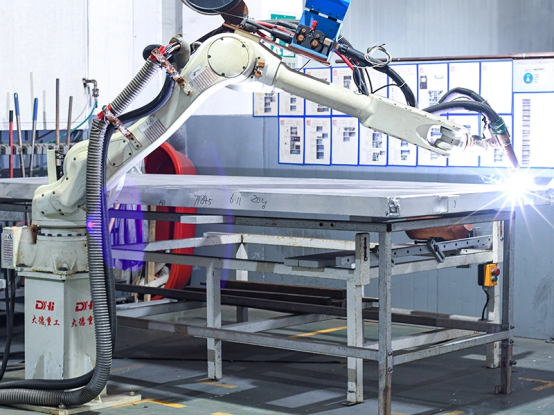
Welding suits heavy structural work: thick plates, pressure vessels, pipelines, frames. It delivers joints that match or exceed base metal strength under high loads, fatigue, or elevated temperatures.
The downside shows up fast on thin walls or precision parts. High heat causes distortion, residual stress, and potential burn-through. Dissimilar metals are tricky—different melting points and thermal expansion can lead to brittle intermetallics.
What is Brazing?
Brazing joins parts without melting the base metals. A filler metal (with a lower melting point) heats above 450°C (840°F) but stays below the base metal's melting point. The molten filler flows into the joint by capillary action, then solidifies, forming a metallurgical bond at the interface.
Standard brazing range: 450–870°C (842–1600°F), with most industrial work at the higher end for stronger fillers such as silver, copper, nickel, or aluminum-based alloys. Flux or protective atmosphere (vacuum, inert gas) prevents oxidation.
The joint gap must be tight—ideally 0.025–0.25 mm (0.001–0.010 in)—for capillary action to work properly. Clean surfaces and proper flux are non-negotiable.
Currently, vacuum brazing and automated furnace lines dominate heat exchanger production. They allow fluxless joining of aluminum, copper, and stainless steel, with excellent repeatability.
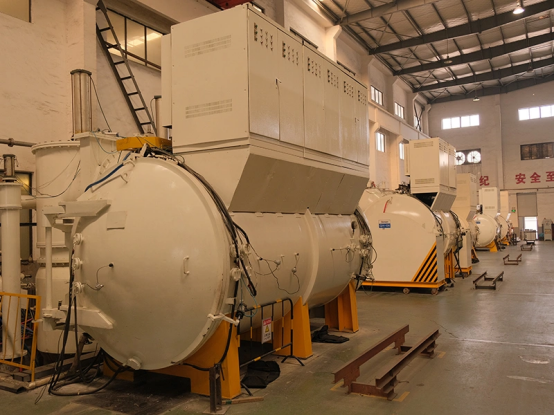
Brazing shines on thin sections, complex assemblies, and dissimilar metals (e.g., copper-to-steel, aluminum-to-copper). Heat exchangers, radiators, HVAC coils, and battery cooling plates rely on it because distortion stays low and seals hold under pressure.
Welding vs Brazing: Key Differences
The processes look similar on the surface, but the mechanics drive very different outcomes.
Here's the side-by-side comparison:
|
Aspect |
Welding |
Brazing |
|
Base metal melting |
Yes (fusion) |
No |
|
Temperature range |
> base metal melt point (>1500°C/2732°F typical) |
450–870°C (842–1600°F) |
|
Heat-affected zone |
Present, microstructure changes |
None or minimal |
|
Joint formation |
Molten pool fusion |
Capillary flow + interface bonding |
|
Joint strength |
Equals or exceeds base metal |
Can equal or exceed base metal in lap joints (with proper overlap) |
|
Distortion |
High, especially on thin parts |
Low |
|
Dissimilar metals |
Limited risk of brittle phases |
Excellent |
|
Joint preparation |
Bevels, grooves, and wider gaps are possible |
Tight gaps (0.025–0.25 mm), clean + flux |
|
Equipment & skill |
High power, skilled operators |
Lower power, easier to automate |
|
Fatigue/corrosion |
Good, but HAZ can be a weak point |
Often better (ductile joint, no galvanic issues) |
Temperature drives everything. Welding's extreme heat melts the base, creating a strong but stressed joint. Brazing keeps the base intact, so thin fins or plates stay flat—no warping that ruins heat transfer efficiency.
Strength surprises many people. In butt welds, welding usually wins. In lap joints (common for heat exchangers), a well-designed brazed joint with 3–6 times overlap can fail in the base metal, not the joint. We've tested this repeatedly: proper overlap turns the brazed area stronger than the surrounding material under shear.
Pros and Cons of Welding and Brazing
Welding
pros:
- Highest load-carrying capacity in tension and fatigue for similar thick metals.
- Handles high service temperatures without remelting.
- Minimal filler is needed in many cases.
cons:
- Distortion and residual stress require clamping or post-weld straightening.
- HAZ can reduce toughness or promote cracks.
- Difficult with thin walls or dissimilar metals.
Brazing
pros:
- Minimal distortion—critical for flatness in heat exchangers.
- Joins dissimilar metals cleanly, with no galvanic corrosion at the interface.
- Ductile joints handle vibration and thermal cycling well.
- Multiple joints brazed at once in furnaces, good for production.
cons:
- Strength depends on joint design and overlap—poor prep leads to weak bonds.
- Not ideal for very high-temperature service (filler may soften near brazing temp).
- Filler costs more, especially silver or nickel alloys.
In our shop, brazing wins 80% of heat exchanger jobs because low distortion and dissimilar compatibility outweigh raw strength needs.
Welding vs Brazing vs Soldering: Which Process Fits Your Project?
Soldering works like brazing but at lower temperatures—below 450°C (840°F). Filler melts and flows by capillary action, but the bond is weaker, suited for electronics, circuit boards, or low-pressure plumbing.
Quick comparison:
|
Factor |
Welding |
Brazing |
Soldering |
|
Temperature |
>1500°C |
450–870°C |
<450°C |
|
Base melt |
Yes |
No |
No |
|
Strength |
Highest (=/> base) |
High (can =/> base in lap) |
Lowest |
|
Distortion |
High |
Low |
Very low |
|
Best for |
Thick structures, high load |
Heat exchangers, dissimilar, thin |
Electronics, non-structural |
Ask these questions to decide:
- Are the metals the same or different? → Brazing if different.
- Wall thickness under 3 mm? → Brazing or soldering to avoid warping.
- High pressure or load? → Welding if structural.
- Service temperature above 400°C? → Welding.
- Need multiple joints at once? → Furnace brazing.
- Batch size large? → Automated brazing lines pay off fast.
For most thermal management parts we produce—plate-fin heat exchangers, cold plates—brazing delivers the balance of strength, seal integrity, and geometry control.
Work with a Reliable Metal Fabrication Partner
Picking the right process is half the battle. Execution matters more: clean surfaces, correct gaps, precise temperature control, and post-braze testing.
At Nanjing Metalli Industrial, we run vacuum brazing furnaces and automated lines tailored for heat exchangers. We handle aluminum, copper, stainless steel combinations, deliver DFM feedback early, and provide full engineering support—free initial consultations, prototypes, and pressure/leak tests.
If your project involves thermal management, send us drawings. We'll review the design, suggest the best joining method, and quote with lead times.
FAQ
What is the main difference between welding and brazing?
Welding melts the base metals to fuse them. Brazing melts only the filler, using capillary action to bond it to the base without melting the base.
Can brazed joints be as strong as the base metal?
Yes, in lap joints with proper overlap (3–6 times thickness), failure often occurs in the base metal, not the joint.
Should heat exchangers use welding or brazing?
Brazing almost always. Low distortion keeps channels flat, dissimilar metals join cleanly, and seals hold pressure without leaks.
Can brazing join aluminum and copper?
Yes, routinely—with the right filler and vacuum or controlled atmosphere to avoid oxidation.
What is the difference between brazing and soldering?
Brazing operates above 450°C (840°F) with stronger fillers and bonds. Soldering stays below 450°C, producing weaker joints for electronics or low-load applications.
Does welding create a heat-affected zone that hurts heat exchangers?
Yes—HAZ can cause warping or reduced fatigue life on thin fins. Brazing avoids this entirely.
When should you avoid brazing?
High-service temperatures near the filler melt point, or extreme structural loads where butt joints dominate.
Is brazing more expensive?
Filler can cost more, but faster production, less post-processing, and lower scrap often make it cheaper overall for precision parts.
How do you choose the right filler metal?
Match it to base metals, service conditions, and corrosion needs. Consult AWS A5.8 classifications or talk to a supplier.
Conclusion
Welding and brazing serve different purposes, even though they are often compared side by side.
Welding is the right choice when strength and structural performance are the priority.
Brazing is more suitable when precision, material flexibility, and production efficiency matter.
Understanding these differences helps you avoid overengineering, reduce cost, and select a process that fits your product—not just the specification.


With a vision of boosting thermal management through innovation, Metalli is dedicating to creating a better thermal management solution for your application.
Shortcut links
Contact Information
Fax: +8625 86136302
Address: NO. 12 East mozhou road, Jiangning development zone, Nanjing, China