

Project Case
How Metal Stamping Works in Manufacturing: Process, Types & Uses
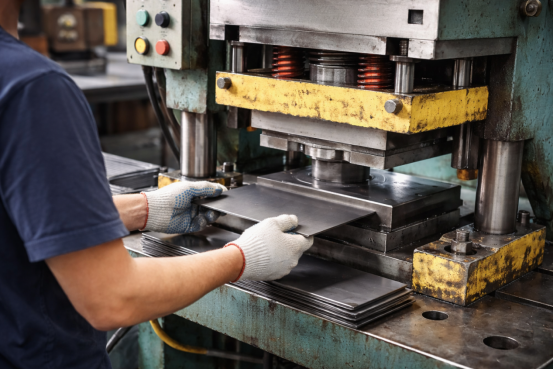
Metal stamping is a cold-forming process that turns flat sheet metal into precise shapes using a press and custom dies. The press applies high force to cut, bend, draw, or form the material at room temperature. This method delivers consistent parts in high volumes with repeatable dimensional accuracy, often within ±0.1 mm depending on material, tooling, and part geometry.
In our shop, stamping is often the preferred process for applications requiring repeatability and production efficiency at scale. It handles everything from simple brackets to complex heat exchanger fins while reducing the need for secondary machining in many applications.
What Is Metal Stamping?
Metal stamping, also called pressing or sheet metal stamping, forces sheet metal into a die under pressure from a stamping press. The material deforms plastically beyond its yield point but stays below fracture. No heat is added in standard operations, which helps maintain dimensional consistency without thermal distortion.
This process differs from CNC machining, where material is removed, or casting, where molten metal fills a mold. Stamping reshapes solid sheet at ambient temperature, making it ideal for thin-walled, lightweight components. It evolved from ancient coin striking to today's automated lines running hundreds of strokes per minute.
The key is repeatability. Once the die is set, parts can be produced with highly consistent repeatability across long production runs.
How Does Metal Stamping Work? (Step-by-Step Process)
The core principle is plastic deformation. When stress exceeds the material's yield strength, the material deforms plastically and retains a permanent shape change.Springback happens as elastic recovery pulls the part back slightly, and wrinkling or tearing can occur if compressive or tensile forces are out of balance.
Here is the typical sequence we follow on the floor.
- First, design the part and tooling. Engineers use CAD to model the geometry, then simulate formability to predict issues like thinning or cracking. The die is built with CNC mills, ire EDM for tight features, and heat treatment for durability.
- Next, prepare the material. Coil or flat blanks are uncoiled, leveled, and cut to size. Thickness usually falls between 0.4 mm and 2 mm for best results.
- Feed the strip into the press. Automated feeders push it forward. The ram descends, closing the die and applying the required forming force based on material thickness, geometry, and operation type.Perform the operations. Multiple cuts, bends, or draws happen in sequence. After the stroke, the part advances or ejects.
- Finish and inspect. Deburr edges, clean surfaces, apply coatings if needed, and check dimensions with gauges or CMM.
The whole cycle repeats rapidly once dialed in. Automation handles most of the work, keeping operators safe and output steady.
Main Types of Metal Stamping Processes
Stamping breaks into separation and forming operations, then specialized setups handle volume and complexity.
Separation Processes
These remove material.
- Blanking cuts the outer shape; the punched piece becomes the blank for further work.
- Punching creates holes; the slug is scrap.
- Trimming cleans excess after forming.
- Notching removes edge sections for tabs or slots.
Forming Processes
These reshape without cutting.
- Bending creates angles; calculate allowances for springback.
- Deep drawing pulls the blank into a die cavity to form cup-shaped or hollow parts with significant depth.
- Flanging adds rims for stiffness.
- Coining squeezes for sharp details and smooth edges.
Specialized Techniques
- Progressive die stamping feeds a strip through multiple stations in one die. Each stroke adds a cut, bend, or form until the part drops complete. Ideal for high volume and complex geometry.
- Transfer die stamping moves larger parts between stations or presses for big components.
- Fourslide uses four horizontal tools that bend simultaneously. Great for intricate wire-like or multi-bend parts with design flexibility.
- Fine blanking applies extra clamping and counterforce for smoother, near-machined edges with minimal burr formation.
- Short run uses minimal tooling for prototypes or low quantities.
Progressive dominates our high-volume runs because it minimizes handling and labor.
What Materials Are Used in Metal Stamping?
Material choice drives formability, strength, and cost. Thickness typically stays 0.4–2 mm for optimal results.
Here is a quick comparison of common options.
|
Material |
Tensile Strength (MPa) |
Density (g/cm³) |
Key Advantages |
Typical Challenges |
Common Uses in Heat Management |
|
Carbon Steel |
300–600 |
7.8 |
Low cost, good strength |
Prone to rust without coating |
Structural brackets |
|
Stainless Steel (304/316) |
≥515 |
7.9 |
Corrosion resistance |
Higher springback, work hardens |
Corrosion-resistant housings and components |
|
Aluminum Alloys (5052/6061) |
110–500 |
2.7 |
Lightweight, good conductivity |
Larger springback (~3x steel) |
Heat sinks, exchanger fins |
|
Copper/Brass |
200–600 |
8.5–8.9 |
Excellent thermal/electrical conductivity |
Edge cracking in severe draws |
Conductive terminals and thermal components
|
Formability depends on elongation, n-value, and r-value. Grain direction matters in high-strength steels—bending against the grain risks cracks. Springback is higher in stainless and aluminum, so tools compensate with over-bend.
For heat management parts, aluminum and copper often win for thermal performance, while stainless handles corrosive environments.
What Equipment Is Used in Metal Stamping?
The press provides force, and the die defines shape.
Press types vary by drive.
- Mechanical presses use fly wheel and crank shaft for high speed. Mechanical presses are commonly used for high-speed blanking and forming operations, especially in progressive stamping applications.
- Hydraulic presses deliver full tonnage across the stroke. Better for deep drawing and variable force needs.
- Servo presses use motors for programmable motion. They control speed, dwell, and position precisely, reducing springback in high-strength materials and saving energy.
Dies include single-station for simple jobs, compound for simultaneous operations, and progressive for multi-step work.
Auxiliary gear like feeders, straighteners, and wire EDM for die making keeps everything running smoothly.
Servo presses are gaining ground here because they handle advanced materials without constant adjustments.
Advantages and Limitations of Metal Stamping
Advantages show up clearly in production.
- High speed and output for large runs.
- Tight tolerances and consistent parts.
- Good surface finish with minimal secondary work.
- Efficient material use once tooled.
- Lower per-part cost at scale.
Limitations come early.
- Tooling investment is high for progressive or complex dies.
- Design changes cost time and money.
- Not economical for very low volumes or prototypes.
- Material thickness and complexity have limits.
- Springback and burrs need control in design.
For runs over a few thousand pieces, stamping usually beats alternatives on cost and speed.
Common Applications of Metal Stamping
Stamping shows up everywhere high-volume precision matters.
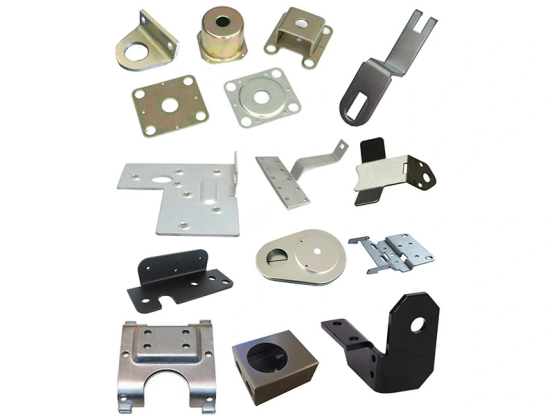
- Automotive uses it for brackets, panels, fuel tanks, and airbag components.
- Electronics needs connectors, terminals, and casings.
- Appliances take internal frames and shells.
- Medical gets instruments and shields.
- In heat management, we stamp fins, housings, and fittings from aluminum or copper for exchangers and coolers.
The process handles the thin gauges and tight features these parts demand.
Is Metal Stamping Right for Your Project?
Run the numbers first.
Check production volume. High quantities favor progressive stamping. Low volumes lean toward short run or alternatives like laser cutting.
Look at complexity.
Multiple bends or deep draws work well if designed right. Avoid sharp corners or bends too close to holes to prevent distortion.
Consider material.
Formability, thickness, and grain direction affect success. Bend radius should be at least half the material thickness, notches at least 1.5 times thickness.
Budget for tooling.
It amortizes over volume. Prototypes may need short run to test.
If your project involves medium to high volume with precise metal features, especially thermal components, stamping often fits best.
How to Choose a Reliable Metal Stamping Manufacturer
Look Beyond the Lowest Price
Look beyond price. Experience with your industry matters. Check if they handle progressive dies, deep draws, or tight tolerances like 0.1 mm.
Evaluate Their Equipment Capability
Equipment tells a story. Servo presses and multi-station tools show capability for complex or high-strength work.
Assess Engineering and Technical Support
Engineering support is key. Good partners offer DFM feedback, reverse engineering, and prototype runs to cut costs early.
Check Certifications and Process Control
Certifications like ISO 9001 or IATF 16949 prove process control. Overseas communication, sample speed, and stable supply chain keep projects on track.
Recognize Red Flags Early
No engineering discussion, vague quotes, or pressure for volume without proof of quality.
At Nanjing Metalli, we provide custom metal stamping services with engineering support for a wide range of sheet metal and industrial components. From brackets and enclosures to precision metal parts, we support both prototype and production projects based on customer requirements. If you have a project, feel free to contact us for DFM feedback or a quotation.
Conclusion
Metal stamping transforms flat sheet metal into functional parts through controlled force and precision tooling. It remains one of the most efficient manufacturing methods for producing high-volume metal components with consistent quality and repeatability.
As manufacturing technology continues to evolve, modern stamping processes offer improved precision, automation, and material compatibility across many industries. Whether for industrial equipment, sheet metal assemblies, or custom metal components, stamping continues to play an important role in modern manufacturing.
If you are evaluating custom stamped parts for your project, contact Nanjing Metalli to discuss your design, material, and production requirements.


With a vision of boosting thermal management through innovation, Metalli is dedicating to creating a better thermal management solution for your application.
Shortcut links
Contact Information
Fax: +8625 86136302
Address: NO. 12 East mozhou road, Jiangning development zone, Nanjing, China