
Project Case
Key Reasons to Opt for Laser Cutting in Sheet Metal Fabrication
When it comes to cutting sheet metal, a myriad of methods exists. Whether your need involves crafting a single custom part, fulfilling a small order, or executing a full-scale industrial process, staying informed about available options is crucial.
The paramount reasons for choosing laser cutting in sheet metal fabrication revolve around its exceptional precision, efficiency, and speed. Laser cutting proves invaluable for intricate designs, prototyping, and large-scale industrial orders. Continue reading to explore the advantages of laser cutting and discern its distinctions from traditional sheet metal fabrication techniques.
Advantages of Laser Cutting in Sheet Metal Fabrication
Efficiency:
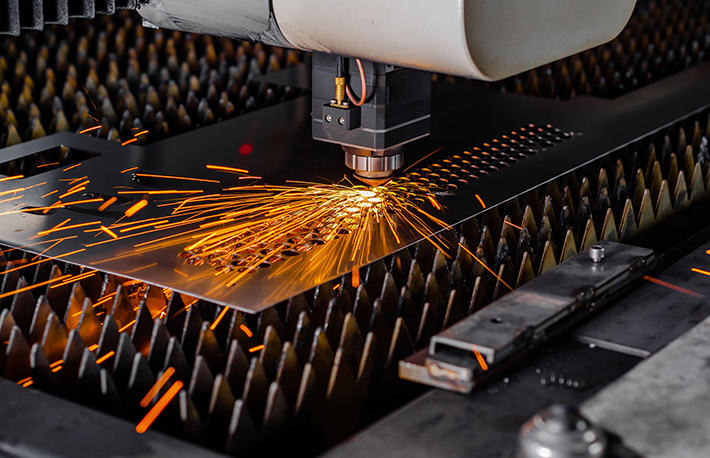
Laser cutting employs a high-powered energy beam that swiftly and efficiently cuts through metal using a CNC machine. Manufacturers design cutting patterns on a CAD program, and these designs are then transmitted to the CNC machine. The cutting process is automated, significantly enhancing speed while reducing costs associated with labor time and tool and equipment upkeep. Certain laser cutting systems can even optimize space by combining multiple designs and patterns.
Speed:
Operating on thermal energy, laser cutters move rapidly, seamlessly cutting various angles and patterns without interruptions to adjust the sheet metal. Some machines achieve top cutting speeds of up to 1200 inches per minute, though the actual speed depends on factors such as material type, metal thickness, and desired tolerance levels. Thermal cutting virtually eliminates burring, the excess material left behind by a cut, streamlining the fabrication process.
Precision:
Automated laser cutting surpasses traditional mechanical methods in precision. The absence of manual operation eliminates the possibility of human error in the cutting process. Laser cutting produces parts with tighter tolerances, with modern machines achieving precise measurements as fine as .005 or even .002 inches. The pinpoint accuracy of laser heat ensures concentrated heat in a small area, preventing metal warping during cooling.
Lower Cost:
While not the most economical method, laser cutting remains affordable for most sheet metal fabrication projects. Due to the substantial upfront cost of large laser cutting systems, manufacturers often outsource laser cutting to specialized companies. However, for those considering in-house operation, the long-term efficiency and reliability of laser cutting justify the initial investment.
Laser Cutting vs. Traditional Sheet Metal Cutting Methods
Traditional sheet metal cutting methods, such as mechanical shearing and die cutting or punching, involve manual operation and machinery with numerous moving parts, resulting in a slower process. In contrast, laser cutting is automated, offering quicker movements than physical blades or punches. CNC machines in laser cutting can swiftly alter the laser's path, expediting the production of new designs compared to systems relying on physical dies.
Summary
In summary, laser cutting stands out as a faster, more accurate, and more efficient alternative to traditional sheet metal cutting methods. The precision, speed, and cost-effectiveness make laser cutting a compelling choice for a wide range of metal fabrication applications.
Metalli specializes in leading edge laser cutting and custom metal fabrication services. Our dedicated and experienced team is centered on providing innovative fabrication solutions to a wide range of markets including automotive and industrial sectors. Call and speak to an associate about how our laser cutting and metal fabrication services can benefit you manufacturing needs.


With a vision of boosting thermal management through innovation, Metalli is dedicating to creating a better thermal management solution for your application.
Shortcut links
Contact Information
Fax: +8625 86136302
Address: NO. 12 East mozhou road, Jiangning development zone, Nanjing, China